Improve
Monday, March 21, 2011
Sprawdzić Chipset Tunera Pinnacle
According to data provided by the National Institute for Agricultural Research (INIAF), seven cultivated species (Solanum stenotomun, goniocalyx, phureja, ajanhuiri, juzepczukii, curtilobum and tuberosum spp andigena) as well as 34 species wild collections of Andean tubers (potatoes) are preserved in the germplasm collection of La Paz. 
 The varieties produced in the country, being commercial (easy to peel and ideal for French fries) are the Huaycha La Paz and Desiree, both belong to the species: tuberosum spp andigena. The
 regard, the executive director INIAF, Erick Murillo says that the yield of potato in the country is relatively low. "We use the center of the potato, which means that we have controlled nearly 3,400 accessions (potato which differs from the other morphologically but genetically and can be collected from different parts of the country). These represent our genetic diversity, in all only 30 are in use by producers. "
tubers produced in very cold areas, in areas mean temperature in the tropics. "These are varieties that produce less than average, but also are ensuring that we produce in different ecosystems."
To achieve this, in late 2008 and the birth of INIAF began the first phase of a research project and technical assistance in the use of high quality seeds covering nine food items and, according to Murillo, provide greater productivity from 2012 to over 3,000 producers in the country. The initiative, during the two years of implementation, entity sued the investment of more than Bs 140 million. Murillo
details that training in cleaning and selection of existing native varieties producing areas under irrigation is carried out by zone. "We are working in the valleys of Cochabamba, Tarija, Chuquisaca, Potosí and Santa Cruz."
Cooperation. Murillo emphasizes support seed production in the last 27 years the Kingdom of Denmark, the Swiss Agency for Development and Cooperation (SDC), the Dutch and the Japanese International Cooperation Agency (JICA ) in the area of \u200b\u200bgermplasm resources received World Bank.
For the SDC, National Programme Officer, Marcelo Collao, indicates that for almost 16 years joined forces with the Ministry of Agriculture and Rural Development, seed producers and other organizations and invested U.S. $ 14 million in various projects. In the for the improvement of potato production, supported with infrastructure, equipment and training. "In some crop production depends on the seed and in the case of the potato represents 30 or 40% of the total production cost. We come from July 2010 to train technicians in the National Seed Program (NSP), to perform the certification of seed they use on their crops. "
The expert refers to the process that ensures that the seed is free of disease and expect high genetic quality and excellent technological level. This culminates with the registration of the variety in the PNS, which currently does not even reach 10% of potato production. "The process that ensures greater production and performance is costly, therefore, 90% work with traditional, rustic seed preferred because it adapts to various climates," he explains. Collao
recalls that until two years ago, the domestic market is supplied with its own production under this system, but must now be accompanied by funding, technology and market access, by the producer and public and private actors.
"Productivity depends on incentive policies," he adds.
tuber sell
Link: http://www.la-razon.com/version_fi.php?ArticleId=602&EditionId=2474&ids=66

What Is A Shiny Stone Used For Heart Gold
wage increase would cause price rise products
 While prices of staple products, maintain their standards, these are high and not lowered since the adoption of Supreme Decree 748 so-called "gasolinazo."
Six months ago, the sugar shortage was almost universal in different markets across the country, which caused an inflationary growth in the cup. However, this product can now be found in the different supply stores, but continues with the high prices. A month ago, the Government at a meeting with the producers of sugar, said that the price shall be adjusted to costs for seven months ago, which means Bs 2 per pound to about Bs 150 per quintal. basket products, such as beef and chicken, the government announced it would lower the market price of 12 and Bs 12.50 Bs, but now is between 14.50 and Bs Bs 16 kilo. For this crop year are projected to obtain an output of 350,000 tons of at least 40 000 families engaged in this field.
wage increase could have a trend of rising costs on staple goods. In addition, data are presented by the National Statistics Institute (INE), are no longer credible to the population, reported to THE DAILY, the economic analyst Gonzalo Chavez. 
"to be seen what impact the wage increase, compared to rising prices of the basket and wait for the data to be leaving in March and thus we will be able to evaluate" he said.  While prices of staple products, maintain their standards, these are high and not lowered since the adoption of Supreme Decree 748 so-called "gasolinazo."
 Six months ago, the sugar shortage was almost universal in different markets across the country, which caused an inflationary growth in the cup. However, this product can now be found in the different supply stores, but continues with the high prices.
For this reason, the analyst reported another factor that could generate the staples go up in price, will the salary increase, as the largest producers of these inputs do not have the ability to increase wages.
"With all the changes and what has worked in the price index for the community, is a deep mistrust of many people between what is said and what they say INE markets showing the difference, then a way to go to solve, is that the INE convene employers, workers, among others, to see if we are measuring inflation well, so there are no more distrust, "said the analyst.
SAVE THE
INE He argued that the country should do what other countries do, for example, that the INE has a group to represent each of the sectors, so that those directories can be collective slowly regaining confidence in the information.
"What we have to do is save the INE, save our statistics, because data that is not true is like being in a dark room," he says.
COST OF LIVING
The rising price of staples in the markets for slaughter between 30 and 50% more than a few weeks ago led the protests.
few weeks ago after a wave of protests by local committees of La Paz, Oruro union, national teachers and others, took to the streets in protest against the government and rising prices. About
The same goes for potatoes, which before it could be found even in the @ 39 Bs, now it is between 45 and 50 Bs. RICE
On the other hand, the Ministry of Production and Economics Plural reported to be reintroduced to buy rice to Beneficiaries of the Enterprise Support Food Production (EMAP) to $ 45 per bushel.
"Accepting the request of the leaders of rice producers will reset the purchase of grain to beneficiaries who are part of the 'Program to Support Rice Production' of Emapa. The purchase price is $ 45 per bushel, "said a statement from the state portfolio.
However, an announcement by the Bolivian Institute of Foreign Trade (IBCE) indicates that production of this input will have a remarkably low because they were affected by climate change, which affected production.
Link: http://www.eldiario.net/
Thursday, March 17, 2011
How Does Nomarks Work
The strength of Japanese agriculture in Bolivia
 He added that the collaboration is done on a project basis and do not have a figure set. in 2009 spent $ 34 million and in 2010 the amount rose to 47 million.
"At the Embassy we are studying the possibility of investing in projects water, irrigation and education, "the diplomat said.
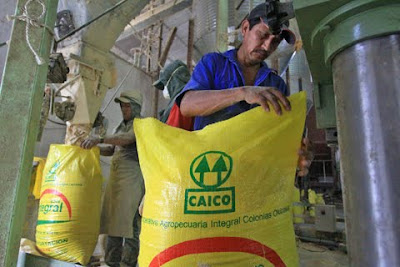
The agro. In regard to the productive part, immigrants had the vision to create a cooperative, which now is an example of work and development. This is the Integral Colonias Okinawa Agricultural Cooperative (CAIC), which receives approximately 85 thousand tons of grain from rice, wheat, sorghum, corn and soybeans. 85 percent of this amount corresponds to the grain of gold, which officials said Caico, "is the product of the area." Caico
38-year period and was created to assist in the following farming knowledge and technologies of Japan's culture.
In its feed mill will process about 240 tons of soybeans per day working 24 hours. Is bagged in sacks of 50 kilos and sold ton $ 500.
output generated by the colonies is about 30 thousand hectares of crops, which supplies the plant Caico. In addition, 65 percent of its production is exported to Peru and the rest is for the domestic market.
The cooperative assistance in regard to technology transfer to farmers.
Moreover, Caico also produces cheese and works with 6000 liters of milk per day, takes about 500 kilos of cheese. This is distributed throughout the country and as part of their production also worked with the brand Okimilk, but then stopped. According Takehiro Higashi, president of Caico, EXPIRATION the short time the product is a limitation. "Going out for milk and we have a day to take to Santa Cruz, then you have to distribute milk and even that is useless. Then we have to improve that, "he said.
"This is the work of our parents who are the pioneers and has been gradually consolidating. I think that we are providing enough food in the country. We have to follow the example of our predecessors in regard to discipline land and agriculture, "said Higa.
Caico. Since its foundation the main activities carried out by the cooperative, have been the support and increased agricultural production and industrialization of various products such as cereal grains, soybeans and integrated feed, among others.
By installing the battery plant and grain storage silos, the installation of a machine off and other projects that have helped to diversify commodity prices and thus improve the cooperative has achieved better economic welfare of its members. Efforts Caico partners in the production of wheat have been recognized by national authorities, thus by a ministerial decision in 2002 declared the Colonia Okinawa as "wheat capital of Bolivia." However, today this crop is produced by little, because Soy has gained more preferably it is the only grain that has national government approval for use in transgenic variety resistant to pests and climatic conditions.
Immigration. In 1953 the national government gave to Japanese immigrants an area of \u200b\u200b10 hectares in Santa Cruz. The first arrived the following year and from then until the nineteenth immigration colony settled in the current Okinawa. The 3,229 people present were from the Okinawa Prefecture of Japan. Asians had to deal with rain and disease, but his effort earned them to form a productive society.
is U.S. $ 1,666 million what Japan has worked in Bolivia since 1960 in several respects.
700 descendants of Japanese is the number of people living in three settlements in Okinawa, north of Santa Cruz.
85 thousand tonnes of grain per year is the processing power that is cooperative.
Aid is for various sectors, the Japanese government helps its immigrants with financial aid, which focuses on social welfare, education and agriculture.
Efficiency in crop production
Japanese culture is also seen in the work of the land. the descendants of work with attention to detail for optimum production.
We have to follow the example of our predecessors in terms of discipline with the land and agriculture. Caico is the fruit of them. Takehiro
Higa, President Caicos Islands, the Japanese colonization began in 1953 and early immigrants were not accustomed to the climate and way of production. Toshio Watanabe, Ambassador
AGENCY assistance offered by JICA Bolivia
THE YEAR 1978 ESTABLISHING Between Bolivia and Japan Technical Cooperation Agreement, framework on which to develop the form of technical assistance. Since 2008, the International Cooperation Agency (JICA) is responsible for implementing modalities of grant aid and concessional credits. JICA
RUN WITH THE GOVERNMENT, programs under the concept of "Human Security", which aims to ensure minimum living conditions for the population.
Link: http://www.eldia.com.bo/index.php?c=Portafolio&articulo=La-fuerza-del-agro-japones-en-Bolivia&cat=357&pla=3&id_articulo = 57399
agricultural development generated by Japanese immigrants since 1953 is now one of the main features of the Colonies 1, 2 and 3 Okinawa, one of the most productive areas of the department of Santa Cruz. Sorghum, rice, corn, wheat and soybeans are the crops that develop along with the technological advances China's agricultural. Several farmers said they work with national professional without But the discipline of Japanese culture is part of the descendants, who at the time of working the land and crops, make their agriculture one of the most efficient in the country. 
A sample of their development. In the worst moment for the country Japan, the U.S. embassy in Bolivia presented the project of refraction of San Alonso Education Center and a tour of the colony Okinawa, located 78 kilometers from the city of Santa Cruz, where he showed the work done the social and productive. This support comes through the International Cooperation Agency (JICA), which the country has invested a lot of money. "From 1960 until last year Japan has collaborated with $ 1,666,000 in respect to education, health, construction of a hospital, funding for rail, opening of schools, water supply, irrigation and roads, "said Toshio Watanabe, Japan's ambassador in Bolivia.  He added that the collaboration is done on a project basis and do not have a figure set. in 2009 spent $ 34 million and in 2010 the amount rose to 47 million.
 "At the Embassy we are studying the possibility of investing in projects water, irrigation and education, "the diplomat said.
The agro. In regard to the productive part, immigrants had the vision to create a cooperative, which now is an example of work and development. This is the Integral Colonias Okinawa Agricultural Cooperative (CAIC), which receives approximately 85 thousand tons of grain from rice, wheat, sorghum, corn and soybeans. 85 percent of this amount corresponds to the grain of gold, which officials said Caico, "is the product of the area." Caico
38-year period and was created to assist in the following farming knowledge and technologies of Japan's culture.
In its feed mill will process about 240 tons of soybeans per day working 24 hours. Is bagged in sacks of 50 kilos and sold ton $ 500.
output generated by the colonies is about 30 thousand hectares of crops, which supplies the plant Caico. In addition, 65 percent of its production is exported to Peru and the rest is for the domestic market.
The cooperative assistance in regard to technology transfer to farmers.
Moreover, Caico also produces cheese and works with 6000 liters of milk per day, takes about 500 kilos of cheese. This is distributed throughout the country and as part of their production also worked with the brand Okimilk, but then stopped. According Takehiro Higashi, president of Caico, EXPIRATION the short time the product is a limitation. "Going out for milk and we have a day to take to Santa Cruz, then you have to distribute milk and even that is useless. Then we have to improve that, "he said.
"This is the work of our parents who are the pioneers and has been gradually consolidating. I think that we are providing enough food in the country. We have to follow the example of our predecessors in regard to discipline land and agriculture, "said Higa.
Caico. Since its foundation the main activities carried out by the cooperative, have been the support and increased agricultural production and industrialization of various products such as cereal grains, soybeans and integrated feed, among others.
By installing the battery plant and grain storage silos, the installation of a machine off and other projects that have helped to diversify commodity prices and thus improve the cooperative has achieved better economic welfare of its members. Efforts Caico partners in the production of wheat have been recognized by national authorities, thus by a ministerial decision in 2002 declared the Colonia Okinawa as "wheat capital of Bolivia." However, today this crop is produced by little, because Soy has gained more preferably it is the only grain that has national government approval for use in transgenic variety resistant to pests and climatic conditions.
Immigration. In 1953 the national government gave to Japanese immigrants an area of \u200b\u200b10 hectares in Santa Cruz. The first arrived the following year and from then until the nineteenth immigration colony settled in the current Okinawa. The 3,229 people present were from the Okinawa Prefecture of Japan. Asians had to deal with rain and disease, but his effort earned them to form a productive society.
is U.S. $ 1,666 million what Japan has worked in Bolivia since 1960 in several respects.
700 descendants of Japanese is the number of people living in three settlements in Okinawa, north of Santa Cruz.
85 thousand tonnes of grain per year is the processing power that is cooperative.
Aid is for various sectors, the Japanese government helps its immigrants with financial aid, which focuses on social welfare, education and agriculture.
Efficiency in crop production
Japanese culture is also seen in the work of the land. the descendants of work with attention to detail for optimum production.
We have to follow the example of our predecessors in terms of discipline with the land and agriculture. Caico is the fruit of them. Takehiro
Higa, President Caicos Islands, the Japanese colonization began in 1953 and early immigrants were not accustomed to the climate and way of production. Toshio Watanabe, Ambassador
AGENCY assistance offered by JICA Bolivia
THE YEAR 1978 ESTABLISHING Between Bolivia and Japan Technical Cooperation Agreement, framework on which to develop the form of technical assistance. Since 2008, the International Cooperation Agency (JICA) is responsible for implementing modalities of grant aid and concessional credits. JICA
RUN WITH THE GOVERNMENT, programs under the concept of "Human Security", which aims to ensure minimum living conditions for the population.
Link: http://www.eldia.com.bo/index.php?c=Portafolio&articulo=La-fuerza-del-agro-japones-en-Bolivia&cat=357&pla=3&id_articulo = 57399
How To Make A Guy For Guy Fawkes
With the harvest, production will rise GUABIRA 20%
La Paz  general manager of the mill GUABIRA, Mariano Aguilera, reported that his talent will increase production from 2.5 million quintals 3 million (20 percent). With this production is to ensure supply of the product in the domestic market.
"GUABIRA will increase, hopefully, to 3 million bushels. However, we are helping quite the sugar sector with advances in planting cane, "said Aguilera. general manager of the mill GUABIRA, Mariano Aguilera, reported that his talent will increase production from 2.5 million quintals 3 million (20 percent). With this production is to ensure supply of the product in the domestic market.  GUABIRA According to the forecast, this production will ensure the supply of sugar in the domestic market and the kilo could be sold in six Bolivians. However, this price has not been formalized.
 On the shortage of sugar in it management, Aguilera said he discussed the possibility of advancing the Cane sugar production is not ripe. "The decisive factor is the shortage of sugar in the market is overpriced on the market. That would be the biggest rush, "he said.
2012, and forecasts are being taken to ensure the supply of sugar through economic incentives and the introduction of machinery and drainage channels, advanced Aguilera.
Link: http://www.lostiempos.com/diario/actualidad/economia/20110317/con-la-zafra-guabira-subira-produccion-en-20_117303_233052.html
2012, and forecasts are being taken to ensure the supply of sugar through economic incentives and the introduction of machinery and drainage channels, advanced Aguilera.
Link: http://www.lostiempos.com/diario/actualidad/economia/20110317/con-la-zafra-guabira-subira-produccion-en-20_117303_233052.html
Subscribe to:
Posts (Atom)